Announcements and E-formation -- March 11, 2026
.jpg)
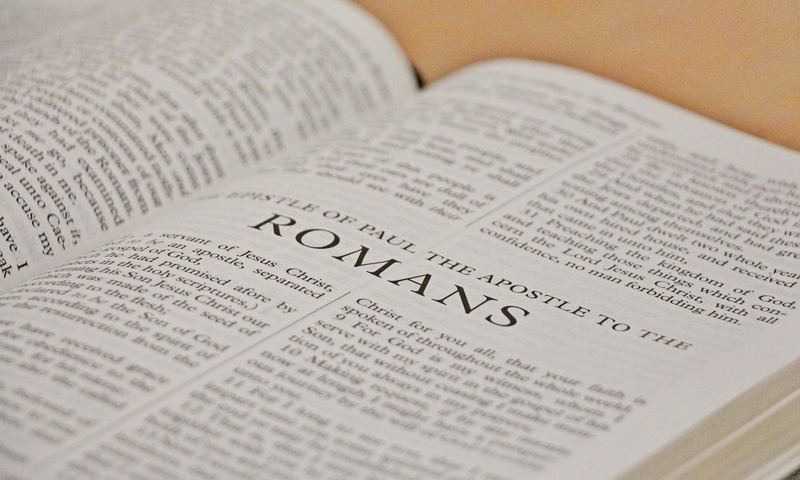
Romans 6:5-8
by Pr. Lisa Rygiel
Scripture
Romans 6:5-8 For if we have been united with him in a death like his, we will certainly be united with him in a resurrection like his. We know that our old self was crucified with him so that the body of sin might be destroyed...For whoever has died is freed from sin. But if we died with Christ, we believe that we will also live with him.
To ponder
The cross solved our problem by first revealing our real problem, our universal pattern of scapegoating and sacrificing others. The cross exposes forever the scene of our crime. — Richard Rohr, Falling Upward
Sin
Our old selves were crucified with Christ so that the body of sin might be destroyed – not the little things we do or don’t do, but the one big thing. In the end, the little things we do or don’t do are simply symptoms of a larger selfishness that values ourselves and our people above all others. For example, we are relatively fine with war, as long as it’s not in our country. We are relatively fine with homelessness, drug abuse and crime, as long as they are not in our neighborhood or family. We are relatively fine with church closures, as long as it’s not our church.
We will maintain our distance and separation from people who are in trouble until and unless we are directly affected. It’s just too dangerous, too scary, too much work, too….something. That’s what composes the body of sin: the decision that I am separate from you that we are separate from them, that the risk of getting involved is too much, and the resulting actions. But in Christ, we die to this idea, our old self, and Jesus sets us free: free to act with love and justice, to work for unity and for human rights – in short, to be one with other people as Jesus is.
Prayer
God, give me the courage where I am afraid and give me love to share. Amen.
March 15, 2026,4th Sunday of Lent
10 a.m. Sunday Worship
Announcements
- Fellowship: Join us after worship next Sunday in the Fellowship Hall for coffee and conversation. All are welcome.
- Wednesday Book Club: The Wednesday Book Club focusing upon What if Jesus was Serious – A Visual Guide to the Teachings of Jesus We Love to Ignoremeets at 10:30 each Wednesday in the Fellowship Hall. There will be no Book Club on March 11.
- Lenten Greenery: During Lent Zion’s will opt for green foliage instead of flowers to reflect the austerity and simplicity of the season.
- Easter Flowers: If you are able to help with Easter flower preparations on Saturday, April 4, please let Mary McKenna or Cherie Holder know.
- Children’s Choir:Children’s choir practice is at 3 p.m. each Sunday in the Fellowship Hall.
- Lenten Soup Suppers: At 5:30 p.m. each Wednesday during Lent, Zion’s will share a soup supper and devotion. Sign-up sheets are in the Fellowship Hall to bring soup, bread, beverages, or dessert. Our next soup supper is at 5:30 p.m. on Wednesday, March 4.
- Time of Prayer and Coffee: The Zion’s family is invited to join our siblings in Christ from the Methodist church for a time of prayer and coffee at 10:30 a.m. each Thursday at Kangaroo Coffee -- in the Marketplace on Commercial Street.
- God’s Work Our Hands: Terri Watson continues to identify members of our congregation who are willing to help our siblings in Christ with basic assistance, such as rides and errands. Terri has sign-up sheets in the Fellowship Hall, which help her to match individual needs with people who can assist. For more information talk to Terri.
- The Way Ministry: At 1 p.m. each Sunday through March 29, Zion’s welcomes The Way ministry to our Fellowship Hall as they offer food and worship to those in need.
- We’re Here for You:For pastoral care, call Pastor Lisa at 719-846-7785 or send an email: zionsluth@gmail.com.
E-formation – 4th Sunday of Lent
The fourth Sunday in Lent continues the focus on baptism as a key to the Christian life. During Lent, as we prepare candidates for baptism, we remember our own baptism, and we renew our lives to live more fully in the light of baptismal grace.
John 9:1-41
At least since the fourth century, the church has used the narrative of the man born blind as a picture of every believer’s baptism, which in early centuries was commonly called “enlightenment.” Our baptism has given us the light of Christ, by which we live, and with which we illumine the darkness in and outside ourselves. Along with the seeing man, we affirm our Lenten faith, “Lord, I believe.” We too are sent by baptism to live a new life.
1 Samuel 16:1-13
The boy David was anointed by the prophet and then received the Spirit of God. In the early church, baptisms usually included an anointing with oil. So, in baptism, we too are anointed, either metaphorically or literally, and having received the Spirit, we too reign in God’s kingdom. The title “Christ” means “the anointed one,” and Christians are those anointed with Jesus Christ to live a transformed life. This story parallels John 9 as a picture about baptism.
Ephesians 5:8-14
Interrupting our Lenten reading of Romans, the passage from Ephesians readies us to hear about the man born blind. Christ shines also on us; we too are to live no longer in darkness, but rather as lights in the world.
-
Location
Office Hours
Contact
