Announcements and E-Formations for the week of Aug. 12, 2026
.jpg)
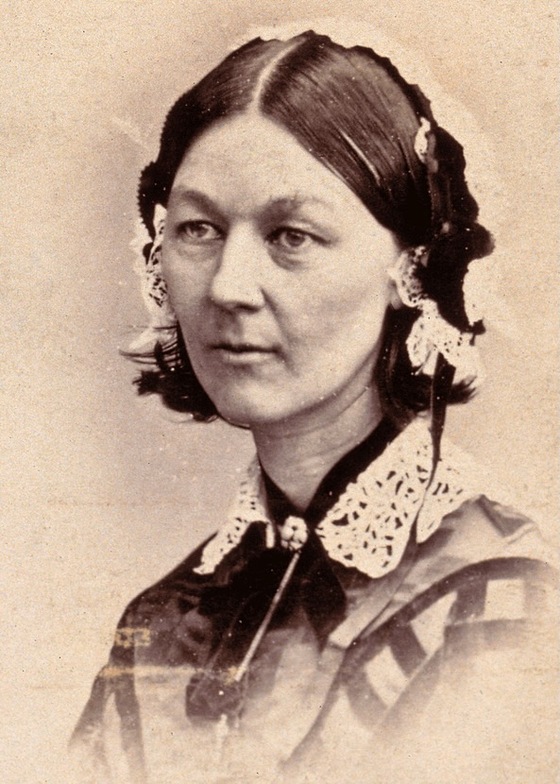
Florence Nightingale
By Pr. Lisa Rygiel
On Thursday, Aug. 13, the church commemorates Florence Nightingale. I am fascinated with her story as she was one of my childhood heroes. The information below has been abbreviated from the book by Michelle DeRusha, 50 Women Every Christian Should Know: Learning from Heroines, Faith Baker Publishing Group.
From the start, Florence Nightingale was certain her life’s calling was to help suffering people. By the time she was a teenager, Florence was regularly visiting the village’s ill and needy. She recorded prescriptions and remedies in a notebook constructed out of scrap paper and old letters. She also included observations related to the illnesses of family members.
When the influenza epidemic swept through southern England in 1837, Florence was the only member of the household, aside from her grandmother and the cook, who did not fall ill. For a month, she tirelessly nursed her family members and others, concluding, when the worst of the flu had subsided, “I have killed no patients, though I have cured few.”
While Florence took a rational approach to faith, she also consistently sought personal union with God. As a child, Florence once conducted an experiment to determine if her prayers were being answered. She recorded what she prayed for, as well as what she considered an appropriate amount of time for the prayer to be answered but was disappointed to find that when she looked for the results of divine intervention, she couldn’t find much evidence for it. On the other hand, she often found the presence of God in nature and in the acts of goodwill she witnessed in the people around her.
Florence was influenced by a wide range of philosophies and theologies, including the medieval Roman Catholic mystics, Lutheranism, the teachings of John Wesley, and the social progress and public-service elements of Unitarianism. Because she was so rational minded and leery of the supernatural, Florence always carefully analyzed each call she heard from God to discern whether it was an inward revelation or a mystical or hallucinatory sensation.
Not long after the flu epidemic, on Feb. 7, 1837, a date noted in her personal calendar, Florence heard a call from God. The voice did not specify exactly what form her service would take, but it was clear enough to convince Florence that she should not dismiss it.
Despite her obvious passion for and skills at nursing, Florence’s parents had no intention of allowing their daughter to pursue such a career. It was unthinkable that Florence, a wealthy, upper-class, educated gentlewoman, would consider an occupation so closely connected to domestic service.
Upon hearing of their daughter’s plan to train at the Salisbury Infirmary, William and Fanny Nightingale dismissed it as selfish foolishness. Furthermore, they reasoned, Florence was expected to marry. For a while, Florence accepted her parents’ wish and bitterly acquiesced to the life of a gentlewoman. Her dreams crushed, she fell into a deep depression.
“God has something for me to do for Him or He would have let me die some time ago,” she wrote. “I hope to do it by living, then my eyes would have indeed seen His salvation, but now I am dust and nothing, worse than nothing, a curse to myself and to others.”
As it turned out, Florence simply could not abandon what she understood as her God-given calling. After unsuccessfully pleading with her father one more time to change his mind, she began to research hospitals in private and secretly settled on the Institution of Nursing Sisters, which had been founded by the prison reformer Elizabeth Fry at Kaiserswerth, Germany, in 1840.
When Florence returned to London in 1853, she accepted a job as superintendent at the Institute for the Care of Sick Gentlewomen. Noting that his daughter would not be deterred, William Nightingale offered her an annual income that generously augmented her salary.
In late 1854, Florence received a letter that changed her life. Her good friend Sidney Herbert, Britain’s secretary of war, asked her to organize a corps of nurses to tend to the sick and wounded soldiers in the Crimea. This was a dramatic and desperate step by the British government. Up to this point no female nurses had been stationed at hospitals in the war, not only on account of their gender, but also as a result of their poor reputation.
As thousands of wounded, ill, and dying soldiers poured into understaffed hospitals, England had no choice but to call in female nurses. Within weeks of receiving Herbert’s letter, Florence accepted the position of superintendent of nurses in the English general military hospitals in Turkey.
She assembled a team of 38 nurses from a variety of religious orders and sailed with them to the Crimea, disembarking in Scutari on the morning of Nov. 4, 1854.
Because of their tenuous position, the nurses initially were not allowed to care for any of the soldiers in the ward unless granted explicit permission by the medical officer in charge. Florence adhered to the military regulations with scrupulous attention.
Florence initially believed the death rates at her hospital were due to poor nutrition, a lack of supplies, and the overworking of soldiers. However, after she returned to Britain and began to collect evidence for the Royal Commission on the Health of the Army, she came to believe that most of the soldiers died as a result of poor sanitary conditions. This knowledge profoundly influenced her later career, when, though largely bedridden by a chronic illness, she advised the British government on military hospital reform, advocated for sanitation improvements in Britain and India, founded a nurses’ training school at St. Thomas’s Hospital in London, and wrote Notes on Nursing, which was used as a cornerstone of nursing curriculum for decades.
When Florence offered her skills and passion, her “great desire to devote [herself] to the sick and sorrowful” to God that day during her vacation in Egypt, she could have never imagined the outcome. God used Florence Nightingale’s great desire and devotion beyond her wildest expectations.
The 12th Sunday After Pentecost, Aug. 12
Announcements
- Fellowship: Please join us after worship in the Fellowship Hall for coffee and conversation. All are welcome.
- Summer Supper Gatherings: Our next summer supper is at 5:30 p.m. on Wednesday, Aug. 12. There is a sign-up sheet in the Fellowship Hall for food and activities. We look forward to seeing you there.
- New Members: Zion’s will welcome new members during worship on Sunday, Aug. 23. If you are interested in becoming a member of Zion’s or want more information, please talk to Pr. Lisa.
- Fellowship Hall Flooring: A tentative schedule has been set for the flooring work in the Fellowship Hall. Flooring should arrive this week. The existing carpet is scheduled for removal beginning Aug. 18. That initial work will be accomplished by members of the congregation; if you can help, please talk to Pr. Lisa or John Rygiel. Remember that there will be some inconveniences during the flooring process, however the long-term results will be well worth the trouble.
- Worship Assistance: We are preparing the worship assistance list (ushers, lectors, communion set up/clean up) for September and October. If you are able to help or can help only on specific Sundays, please let Jo Moss know.
- Wednesday Book Club: Book Club is on hiatus during August.
- Save the Date: God’s Work Our Hands Sunday for Zion’s will be Sept. 13. The plan is for a special GWOH worship and brunch at Zion’s before a sing-along at the Legacy as well as put together hygiene kits for the homeless to be distributed by Keep Trinidad Safe. Updates will follow in the E-Formation, Bulletins, and September Newsletter.
- We’re Here for You: For pastoral care, call Zion’s at 719-846-7785 or send an email: zionsluth@gmail.com.
E-formation
Throughout history, countless stories have portrayed the foreign woman in our upcoming gospel. A foreign woman argues her case before Jesus, but in the end, she is blessed. Come to hear this interesting story and join us for mercy at the Master’s table.
Matthew 15: 21-28
Although Matthew’s gospel repeatedly connects the Christian community with Jewish tradition, chapter 15, near to the center of the gospel, includes several of the passages that broaden the picture. According to the evangelist, Jesus altered the traditional emphasis about ritual purity to one about interior obedience to God, and in the narrative of the healing the Canaanite woman, Jesus praised the faith of a Gentile. It is likely that Matthew, writing in the 80s and not quoting Jesus verbatim, is correcting some in his community who understood the Messiah as saving only the Israelites: Matthew’s church now includes both Jews and Gentiles.
Isaiah 56:1, 6-8
Into the new situation of post-exilic Israel, Third Isaiah spoke a surprising poem that welcomes non-Jews into the worship life of the temple. The prophet hopes to alter Israelite enmity with a focus on divine mercy. This openness to the outsider represents a totally opposite view of the return from exile from the one indicated in Ezra and Nehemiah.
Romans 11:1-2a, 29-32
Paul’s letter to the Romans continues his argument about the relationship between Jews and Gentiles in the Christian community. Apparently, Christian openness to Gentiles had led some to assume that now the Jews had been rejected from divine mercy. In this passage, Paul stressed that while being open to Gentiles, God will also continue to bless the Jews.
Zion's Lutheran Church
zionsluth@gmail.com
719-846-7785
-
Location
Office Hours
Contact
