Announcements and E-Formations for the week of Aug. 26, 2026
.jpg)
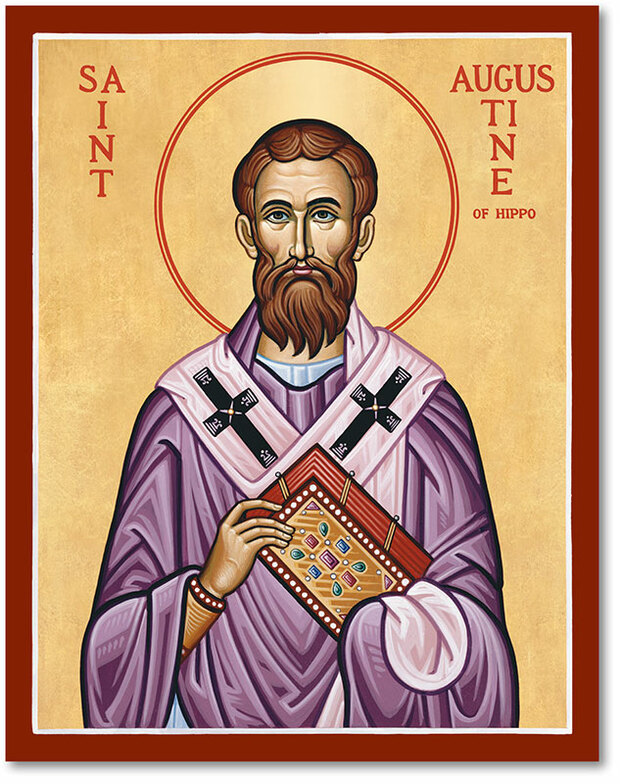
Augustine, Bishop of Hippo
By Pr. Lisa Rygiel
On Friday, August 28, 2026, Augustine, Bishop of Hippo is commemorated by the church.
Augustine of Hippo, also known as Saint Augustine, was a North African Christian theologian, philosopher, and Bishop of Hippo Regius whose works shaped Western Christianity and philosophy. Trained in rhetoric, he moved from Manichaeism and Neoplatonism to Christianity, converting in 386 and being baptized by Ambrose.
He is known as Doctor Gratiae ("Doctor of Grace") for the vast influence of his views on the necessity of unmerited, prevenient grace, for salvation and the nature of original sin.
Additionally, he made important contributions in ecclesiology, noting the validity of sacraments regardless of the merit of the celebrant against the views of the Donatists. (Donatists argued that Christian clergy must be faultless for their ministry to be effective and their prayers and sacraments to be valid.
His major writings, including Confessions, The City of God, and On the Trinity, address grace, original sin, free will, time, memory, and the Church. Influential in both Catholic and Protestant traditions, his thought remains foundational in theology, ethics, and politics.
14th Sunday in Pentecost, Aug. 30
Announcements
- Celebration of Life: Following worship on Sunday we combine our fellowship time with a Celebration of Life for Marla Morris. The Celebration of Life service will begin at 11:30 a.m. on Sunday in the Fellowship Hall A special potluck luncheon will follow and all are welcome.
- 5-Loaves Help Needed: If you can help prepare and/or deliver 5-Loaves meals on Saturday, Aug. 29, please let Jo Moss, Terri Watson, or Norine Hazen know.
- Summer Supper Gatherings: Our final summer supper is at 5:30 p.m. on Wednesday, Sept. 9. We look forward to seeing you there.
- Be Aware of the Bears: Mama Bear “Katerina” and her three growing cubs have taken up residence in our lower lawn and in the pine tree between the back of the Sanctuary and the Fellowship Hall, use caution when walking between the buildings, and do not provoke the bears. The game warden has tagged all four bears and is aware of their presence. Our goal is to keep one another, as well as the bears, safe.
- Worship Assistance: We are preparing the worship assistance list (ushers, lectors, communion set up/clean up) for September and October. If you are able to help or can help only on specific Sundays, please let Pr. Lisa or Jo Moss know.
- Zion’s Book Club: Will resume on Tuesdays, beginning at 10:30 a.m. on Sept. 15.
- Save the Date: God’s Work Our HandsSunday for Zion’s will be Sept. 13. The plan is for a special GWOH worship and fellowship at Zion’s before a sing-along at the Legacy. We also will assemble hygiene kits for the unhoused, which will be distributed through Keep Trinidad Safe. We are grateful to Jody Alford who already has procured 30 toothbrush/toothpaste packets. Please review the lists below for items needed. For more information, talk to Pr. Lisa.
- Basic Hygiene Kit include: Toothbrush & toothpaste, shampoo, body soap, razors (men and women), combs, mini deodorant, alcohol-free hand sanitizer, band aids, cleansing towelettes, ChapStick, nail clippers.
- Feminine Kits include those items as well as: tampons, mini and full-size pads, and feminine wipes.
- One-Gallon plastic zip bags are needed.
E-formation
Matthew 16:21-28
Reading through Matthew we glimpse some of the struggles about leadership in the early Christian community, for although last week Matthew accorded Peter authority in the early Christian community, this second half of the episode tells of Jesus chastising Peter for forgetting that the Christian life leads to the cross. The Rock is now Satan. Matthew writes believing that the end of the world is imminent. The Son of Man, an eschatological figure who hovers between God and the human race, will come to judge the world. Thus, believers need no longer live for this world.
Jeremiah 15:15-21
Jeremiah lived during a turbulent time of continuous warfare in the Middle East. Speaking and writing the words of God between 626 bce and 586 bce, Jeremiah announced that the evil people were suffering was punishment because of their unfaithfulness to God. The idea is that since only God has such power, God must be the just source of such sorrow. For this unpopular position, Jeremiah was continuously opposed. In the poem of 15:15-21, Jeremiah complains about how he is treated, but he trusts in God’s promises, and he “eats” God’s word with joy. Once again, the believer hears from God, “I am with you.”
Romans 12:9-21
Writing to the church in Rome, Paul makes clear that Christians should attend in love to each other and work to alleviate the sufferings of others, never adding to human misery by acts of reprisals. Christians continue the work of Christ by overcoming evil with good.
Zion's Lutheran Church
zionsluth@gmail.com
719-846-7785
-
Location
Office Hours
Contact
