Announcements and E-formation -- April 8, 2026
.jpg)
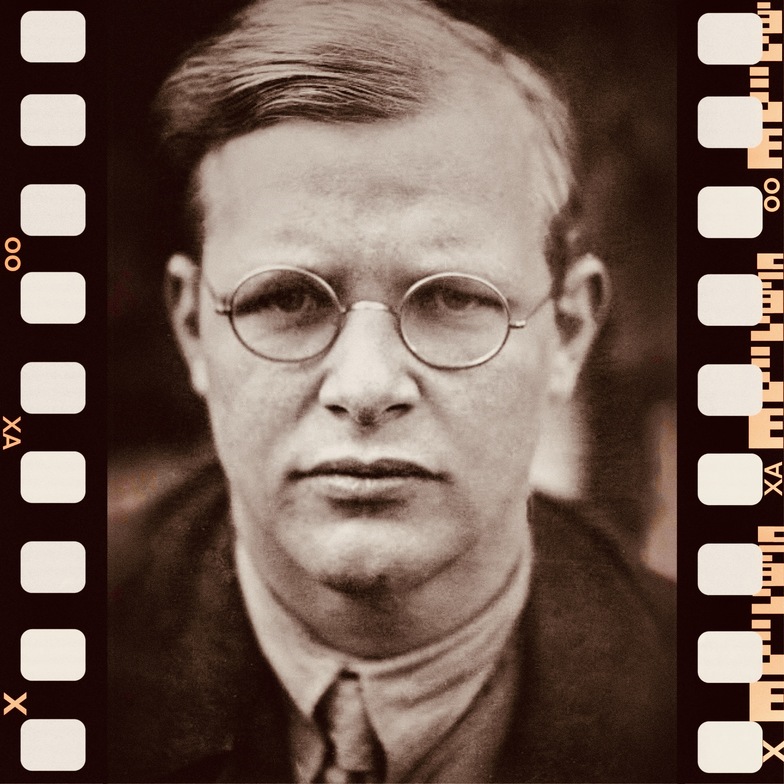
Dietrich Bonhoeffer Commemoration
By Pr. Lisa Rygiel
The ELCA uses a resource called Sundays and Seasons. This provides support to Pastors and church administrators in preparing for worship. One of the features of Sundays and Seasons is that it provides information on upcoming commemorations. This week, we commemorate Dietrich Bonhoeffer, a German theologian, on Thursday, April 9, 2026. Some of us were fortunate enough to have attended Dr. Rev. Becky McNeil’s class that she led on Bonhoeffer last year. If you missed that or want a refresh on this amazing man, read on.
Dietrich Bonhoeffer was a German Lutheran pastor, theologian, and Christian martyr whose life and work continue to shape Christian theology, ethics, and discipleship today. He is remembered not only for what he wrote, but for how he lived—and died—in faithfulness to Jesus Christ.
Dietrich Bonhoeffer was born on February 4, 1906, in Breslau, Germany (now Wrocław, Poland), into a highly educated family. His father was a prominent psychiatrist, and his upbringing was intellectually rich but not especially religious. At the age of 14, he decided to study theology and pursue ministry at the objections of some of his family.
He earned a doctorate in theology at age 21 and quickly became known as a brilliant academic. Yet Bonhoeffer later reflected that in these early years he had become “a good theologian but not a Christian,” realizing that theology divorced from lived faith was insufficient.
A turning point came during Bonhoeffer’s year at Union Theological Seminary in New York (1930–1931). While he found much of the academic theology there lacking, his experiences at Abyssinian Baptist Church in Harlem profoundly shaped him. There he encountered living faith expressed through worship, preaching, suffering, and the struggle for racial justice.
From this point on, Bonhoeffer’s theology became intensely practical, Christ-centered, and communal. He came to believe that Christian faith must be lived concretely in the world, especially in times of injustice.
When Adolf Hitler came to power in 1933, Bonhoeffer was one of the earliest and clearest Christian critics of the Nazi regime. He rejected the attempt to merge Christianity with Nazi ideology, especially policies that excluded Jewish Christians from church.
Bonhoeffer became a key leader in the Confessing Church, a movement that refused to submit the gospel to state control and insisted that Jesus Christ alone is Lord of the Church, not any political leader.
During this period, he led an illegal underground seminary at Finkenwalde, training pastors in disciplined prayer, Scripture, communal life, and costly obedience—later reflected in his book Life Together.
Bonhoeffer’s most famous work, The Cost of Discipleship (1937), grew directly out of this struggle. In it, he contrasts “cheap grace”—forgiveness without repentance or obedience—with “costly grace,” which calls believers to follow Christ even unto suffering and death. For Bonhoeffer, discipleship was not theoretical; it was a matter of life and faithfulness.
As Nazi oppression intensified, Bonhoeffer became involved in the German resistance, working with members of military intelligence who sought to overthrow Hitler. Though personally committed to Christian ethics, Bonhoeffer wrestled deeply with the moral cost of resistance, believing that responsible Christian action sometimes required bearing guilt before God rather than preserving moral purity.
He was arrested by the Gestapo in 1943 and imprisoned for nearly two years. During this time, he wrote letters and theological reflections later published as Letters and Papers from Prison, exploring ideas such as suffering, responsibility, and “religionless Christianity”.
Bonhoeffer was executed by hanging on April 9, 1945, at Flossenbürg concentration camp, just weeks before the end of World War II. Witnesses recall that he faced death with calm faith and prayer.
Dietrich Bonhoeffer is remembered because his life embodied a powerful truth: Faith in Christ is not proven by words alone, but by obedience when it costs us something.
He challenges Christians to ask:
- What does it mean to follow Jesus in times of moral crisis?
- How do faith, courage, and responsibility intersect?
- Where is Christ calling the Church to speak—and to act—today?
His witness continues to speak to pastors, theologians, and ordinary believers seeking faithful discipleship in a complex and often unjust world.
April 12, 2026, 2nd Sunday of Easter
10 a.m. Sunday Worship
Announcements
- Fellowship: Join us after worship Sunday in the Fellowship Hall for coffee & conversation. All are welcome.
- Wednesday Book Club: The Wednesday Book Club is focusing upon What if Jesus was Serious – A Visual Guide to the Teachings of Jesus We Love to Ignore. It meets at 10:30 a.m. each Wednesday in the Fellowship Hall. You can join at any time, so if you haven’t been able to attend before now, why not consider doing so.
- Church Council: The next church council meeting will take place after worship on Sunday, April 12.
- Children’s Choir: Choir practice is at 3 p.m. next Sunday in the Fellowship Hall.
- Bad Faith: At 6 p.m. on Thursday, April 16, at 6 p.m., we are invited to view the film Bad Faith with our siblings in Christ at the United Methodist Church Trinidad. Following the movie viewing, you are welcome to submit any questions/comments to the Rev. Jan Everhart. A follow up discussion led by the Rev. Jan Everhart will be held in the Zion’s Fellowship Hall on Thursday, April 30. Please feel free to bring a snack or a brown bag for each event.
- Time of Prayer and Coffee: We are invited to join our siblings in Christ from the Methodist church for a time of prayer and coffee at 10:30 a.m. each Thursday at Kangaroo Coffee -- in the Marketplace on Commercial Street.
- God’s Work Our Hands: Terri Watson is coordinating efforts to match people who are able to provide outreach and support to members of our congregation who need assistance, such as rides and errands. For more information talk to Terri or use the sign-up sheets in the Fellowship Hall.
- Zion’s Camp Out: Mark your calendars! We have reserved the group camping area at Trinidad Lake State Park May 31 (Sunday) through Wednesday June 3. We are looking for people interested in leading activities and coordinating this adventure. Please see Pastor Lisa if you have suggestions.
- We’re Here for You: For pastoral care, call Zion’s at 719-846-7785 or send an email: zionsluth@gmail.com.
E-formation
The church keeps Easter for eight Sundays. Early Christians referred to Sunday as the eighth day, as if the normal week of seven is miraculously completed in an extraordinary eighth day. The fifty days culminates at Pentecost. Each Sunday, individually and communally, we meet the risen Christ in word and sacrament.
John 20:19-31
The church continues the pattern alluded to in John’s gospel, of assembling on the first day of the week to receive the Spirit of the cross and resurrection and to exchange the peace of Christ. As we expect of John, the narrative in chapter 20 testifies to the identity of Christ as Lord and God. For Christians, to touch Christ is to touch God, and we do this in the flesh of our neighbor’s hand at the peace and with the bread of Christ in our palm at communion.
Acts 2:14a, 22-32
Throughout the Sundays of the fifty days of Easter, passages from Acts proclaim the meaning of the resurrection. Although many contemporary Christians do not share Luke’s hermeneutic, we build this Sunday upon this early Christian proclamation of God’s raising Jesus from the place of the dead to be the power of the church emerging throughout the world. Each Sunday we are witnesses of the resurrection.
1 Peter 1:3-9
In Year A, the second readings throughout the Easter season read semi-continuously through the letter of 1 Peter, which can be seen as an early example of post-baptismal catechesis. What does it mean to be baptized into the death and resurrection of Christ? This passage readies us to hear the narrative concerning Thomas and John’s words about whose who have seen the risen Christ and those who have not, all of whom are called to “an indescribable and glorious joy.”
Zion's Lutheran Church
719-846-7785
-
Location
Office Hours
Contact
